Why are there two churches in Duxford?
Historically, there were four manors within the parish boundary. Those of Temple and Lacy's endowed the village with St John the Baptist's Church and d'Abernon and Bustelers gave the village St Peter's Church, giving the village two ecclesiastical parishes. The churches were symbols of wealth and status, but also a gift to those who worked and lived nearby who would forever be grateful to their masters for giving them a grand place of worship.
This region of south Cambridgeshire is not rich in natural stone and the best freely-available materials with which to construct the churches were cobbles, flint and field rubble. Stone was expensive and was reserved for only the most significant architectural features, all other internal building blocks were made of local clunch. This is highly compacted chalk, soft and easy to carve, but able to bear the load of the roof.
There was a clear fidelity to each church which lasted until 1874 when they finally combined into the single parish of St Peter's with St John's. From this point on, St John's was closed and used only occasionally as a mortuary chapel and a chapel of ease. This led to its severe decay and almost collapse. It was taken into the catalogue of redundant churches by The Churches Conservation Trust in 1979 who now oversee its core maintenance and upkeep. St Peter's Church remains active within the Diocese of Ely, working closely with its immediate neighbours at Hinxton & Ickleton. Together, they form the HINKLEDUX group.
St Peter's Church
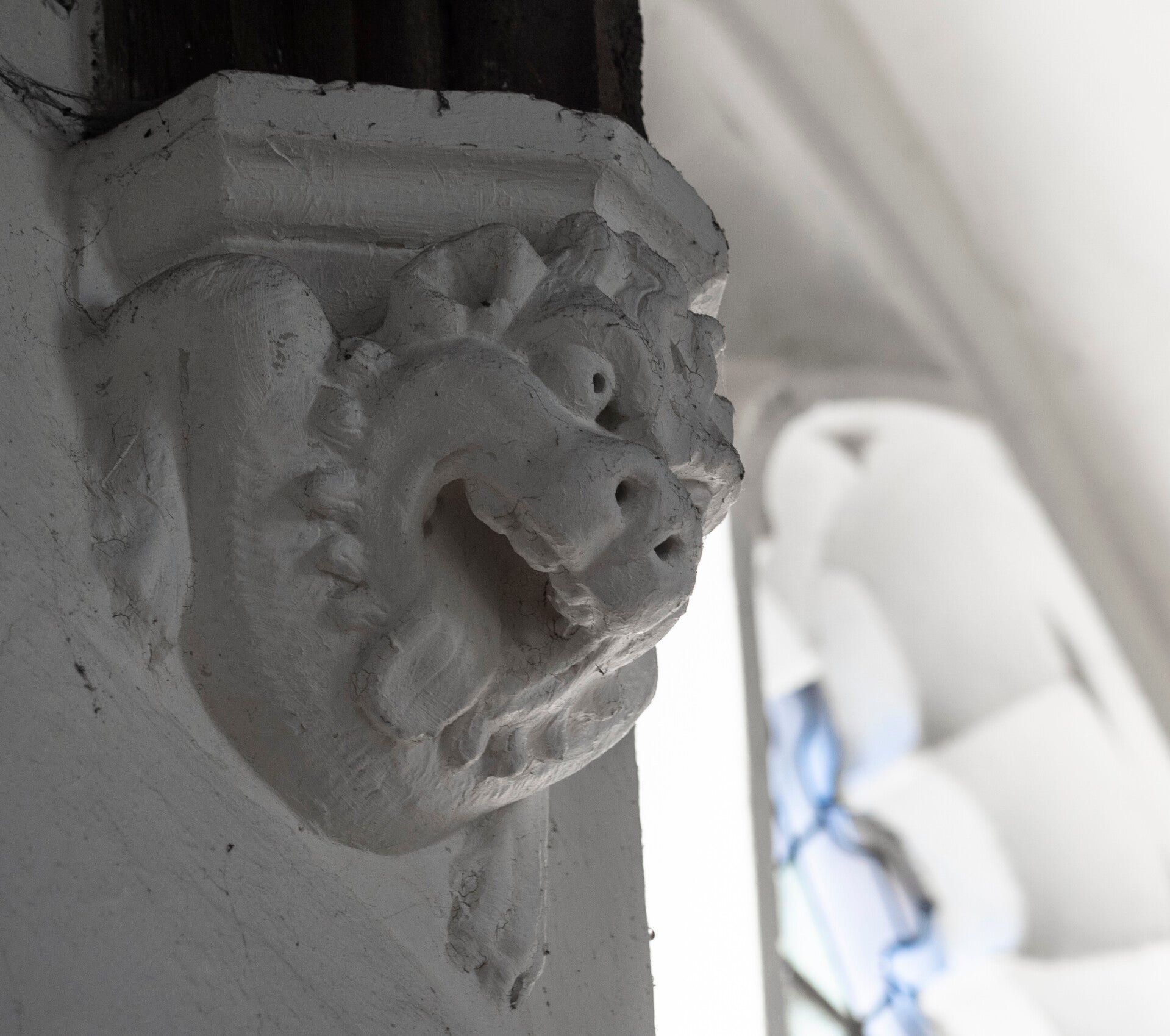
The church dates from the early 12th century and features one of, if not the best complete Norman towers in the county. Through the ancient door there is a fine Norman arch to the tower and a square font of similar age. The stained glass is by Powell & Sons of Whitefriars and F.C. Eden (east & west windows). There is a striking opus sectile reredos from the late 19th century which completes the chancel decoration. Ornamental niches in the north aisle are supported by angels with outspread wings that survived the iconoclasts almost intact. A worn ledger stone marks the remains of Richard King who endowed the village with its first school.
St John the Baptist Church
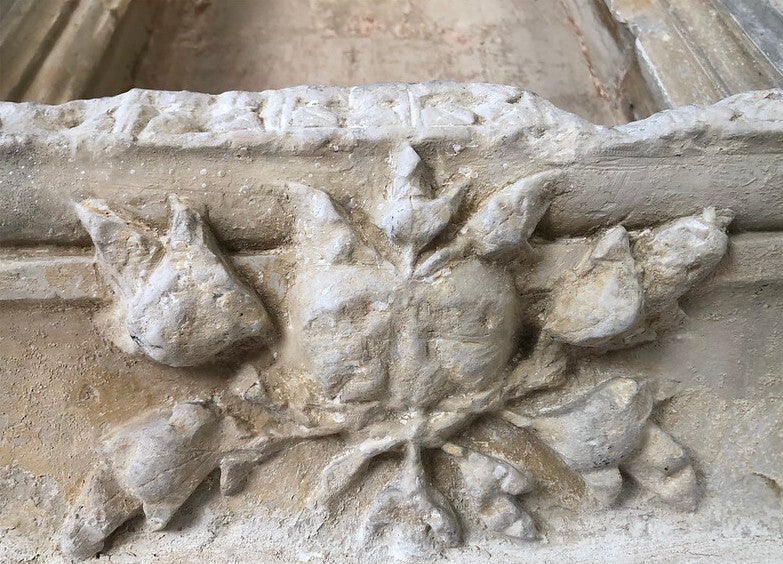
One of Cambridgeshire's most-loved churches. Its origins are early 12th century with a small but fine Romanesque south door and beautiful round arches supporting the central tower. Wall decorations are from the 12th, 13th and 15th centuries, including a partially-revealed scheme of chancel paintings depicting the crucifixion, as well as graphic martyrdom scenes. The decorated north chapel, once the village school, is now bare but the stonework belies its grand origins including a foliate head under the southern niche. Ancient graffiti covers a wooden chancel desk and most of the clunch arcades. There is no remaining stained glass but the rustic beauty of the interior is enhanced by large clear windows that flood the unrestored church with light.
Visit us today
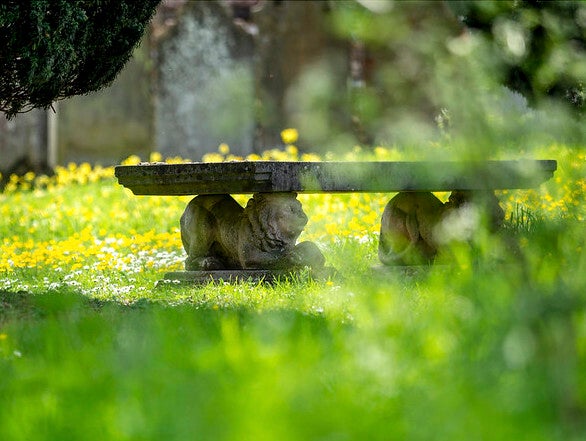
Visitors are welcome 365 days a year at both of Duxford's churches. They are open from around 8am until dusk. If you require access outside of these hours, please contact us.
Although redundant, St John the Baptist remains consecrated and is used several times a year for services, most notably at Easter and All Souls. Other services (funerals, blessings, christenings and weddings) can be held there by specific arrangement with The Churches Conservation Trust.
St Peter's Church
1 Chapel Street, Duxford CB22 4RJ
Tel: (01223) 690211
St John the Baptist Church
Green Street, Duxford CB22 4RG
Tel: (07971) 004898 (local keyholder)